
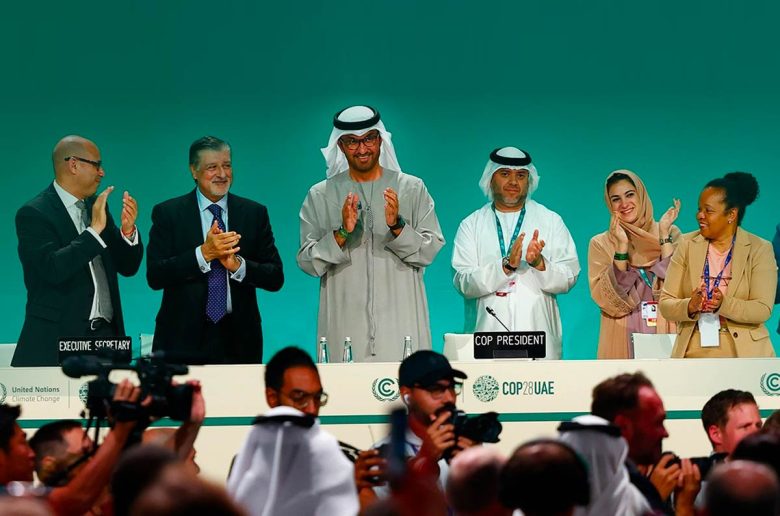
The UN climate summit COP28, held in Dubai this year, dragged on. The negotiations were tough, but during the morning it was announced that a decision had been reached. For the first time, the countries that signed the agreement must “transition away from fossil fuels and towards renewables and energy efficiency”.
That fossil fuels are mentioned in that way is unique and is described as a historic decision.
Critics of the agreement have, however, called for the word “phasing out”. EU climate chief Wopke Hoekstra sees the agreement as the beginning of the end for fossil fuels but says the transition to renewable fuels is now allowed to look different for different countries.
– With an unprecedented reference to transitioning away from all fossil fuels, The UAE Consensus is delivering a paradigm shift that has the potential to redefine our economies, the UN Climate Change Conference Panel for the United Arab Emirates writes in a statement.
Among the points mentioned in the decision are:
- Triple renewable energy capacity globally and double the global average annual rate of energy efficiency improvements by 2030.
- Accelerate efforts to phase out coal energy.
- Accelerate efforts globally to net-zero energy systems, using zero- and low-carbon fuels well before or around mid-century.
- Transition from fossil fuels in energy systems, in a fair, orderly and equitable manner, accelerating action in this critical decade, to achieve net zero by 2050 according to the science.
- Accelerate zero- and low-emission technologies, including but not limited to renewable energy sources, nuclear power, mitigation and enhancement technologies such as carbon capture and storage, especially in hard-to-reduce sectors, and low-carbon hydrogen production.
- Accelerate and significantly reduce non-carbon emissions globally, including in particular methane emissions by 2030.
- Accelerate the reduction of emissions from road transport, including through infrastructure development and rapid deployment of zero- and low-emission vehicles.
- Phase out inefficient fossil fuel subsidies that do not address energy poverty or just transitions, as soon as possible.
Through the agreement, the world must reach zero net emissions of greenhouse gases by 2050.




